

Cotton Cheesecake / Japanese Cheesecake is my new favorite dessert and after you try this recipe, it will become your favorite too! It’s the perfect combination of sponge cake and cheesecake in both taste and texture. What I love about this scrumptious cake is it’s not overly sweet as some cakes can be. The combination of fluffy cake with slightly tart cream cheese is absolutely heavenly. I hope you enjoy this Cotton Cheesecake / Japanese Cheesecake recipe as much as I do. Please note this recipe can be a bit tricky. Watch the video and follow the steps exactly. Happy Baking!
Watch the video for instructions.

Notes on the Cotton Cheesecake Recipe, Tips and Tricks
As the cream cheese, eggs and butter need to be at room temperature, advanced planning is required. About 2 hours before making the cake, remove the cream cheese and butter from the refrigerator. About 1 hour before, take the eggs out of the fridge. The cream cheese and butter should be soft and spreadable for this recipe. If the ingredients are not quite ready, pop them in the microwave on Low power for about 15-20 seconds.
Eggs are easiest to separate when they are cold. Egg whites are best beaten at room temperature to achieve the fluffiest texture. Separate the eggs while they are cold and then let them come to room temperature as you prep the remaining ingredients for the recipe.
Use an 8 inch by 3 inch round springform pan. Line the pan so the parchment paper extends about 2 inches above the pan. The parchment paper wall provides support since the cake rises to about 3 inches tall during baking. Keep the paper to no more than 5 inches tall. Too much paper will prevent the top of the cake from browning nicely.
The water bath is essential for keeping the cake moist. As the cake bakes for longer than the typical cake, the water bath is crucial. Additionally, the water bath insulates the cake and allows it to bake at a consist temperature. These factors are important for achieving the fluffy and moist texture for the cake.
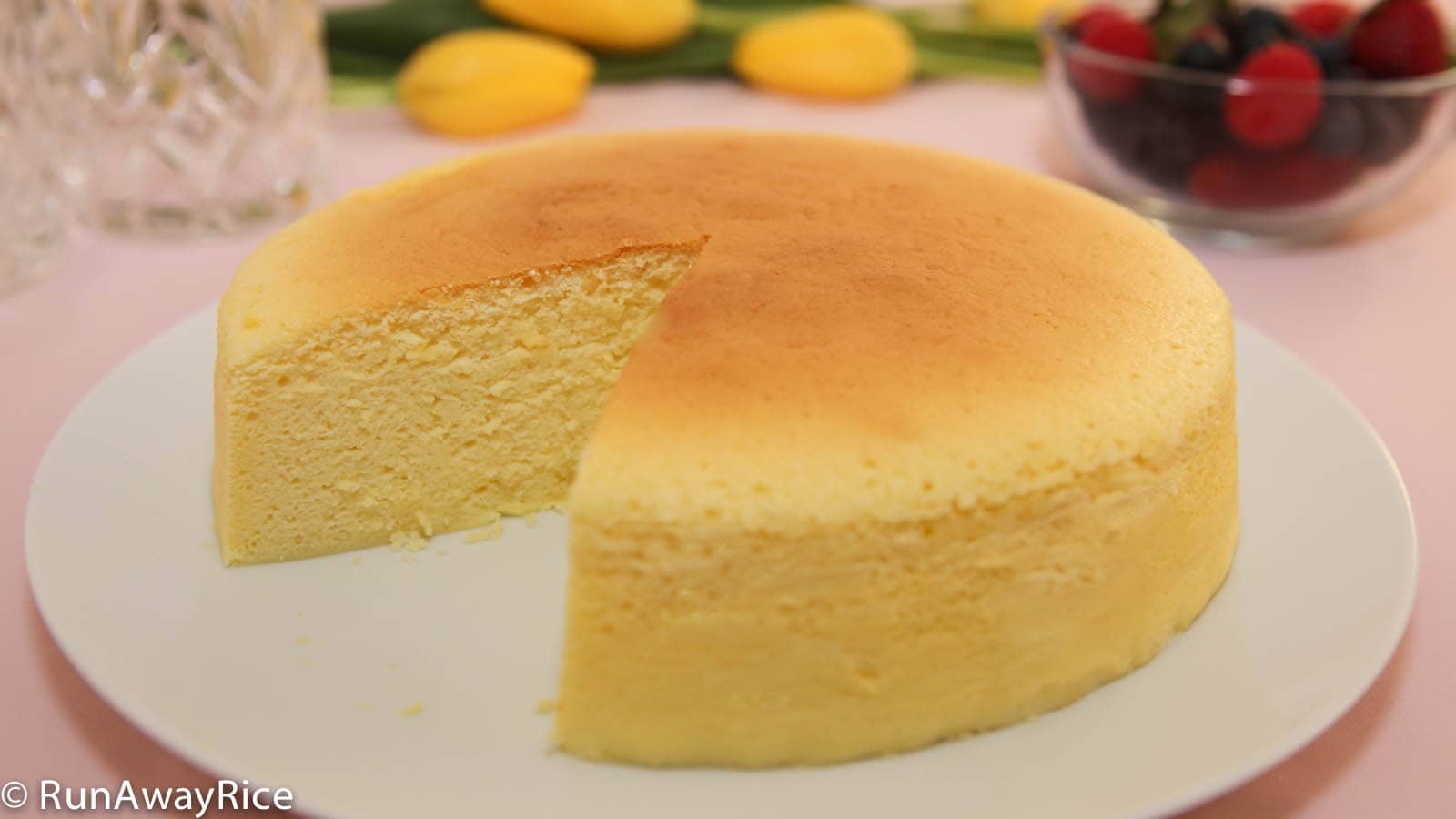
Be sure to fold the egg whites into the batter. Do not beat or mix vigorously as this will deflate the egg whites. (If you’re not familiar with the fold technique, check out how I do it in the video.)
As oven temperatures vary, check to see if the cake is done (by using a toothpick) after 1 hour of baking. Then bake the cake until the top is golden brown. This is one recipe where over-baking the cake is ok. You won’t ruin the cake! Depending on your oven it may take up to 1 1/2 hours. Again, this is just fine.
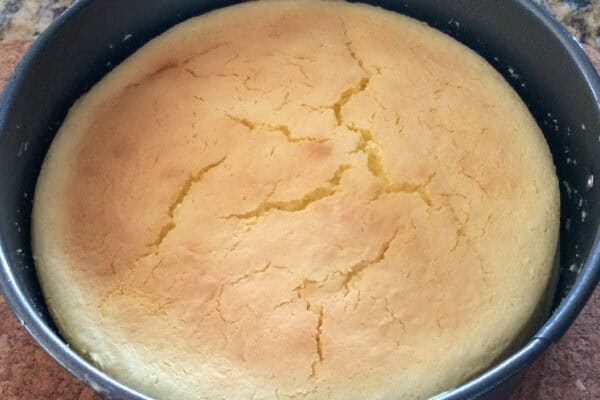
If your cake cracks on top, the heat is too high or the cake is too close to the heating element. Make note of this and adjust these things the next time.
The Cotton Cheesecake will shrink (about 1/2 inch or so) after cooling so please don’t despair. Leaving the cake in the oven after it’s done baking helps to minimize some of the deflating.
Refrigerate the Cotton Cheesecake for at least 4 hours before eating. The cold air sets the cream cheese and greatly improves the flavor and texture.
Store any remaining cake in the refrigerator for up to 1 week. To freeze, wrap the cake securely with plastic wrap and then a layer of foil. Freeze for up to 3 months.
✨✨I just shared a post on the most common challenges with making Cotton Cheesecake / Japanese Cheesecake and I explain all the details with pictures of my past frustrations. If you’re new to making this cheesecake or have made it without much success, check out the post before starting the recipe!
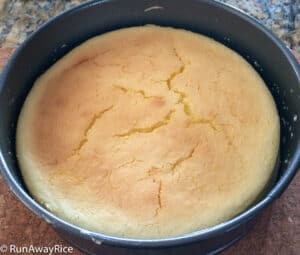 Cotton Cheesecake Challenges: Deflation, Cracks, and Water Bath Issues
If you enjoy this Cotton Cheesecake / Japanese Cheesecake recipe, you may also like:
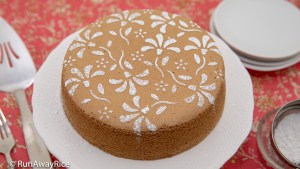
Chocolate Cotton Cheesecake / Japanese Cheesecake
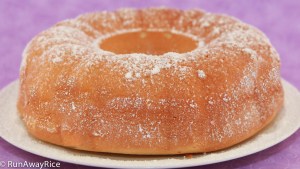
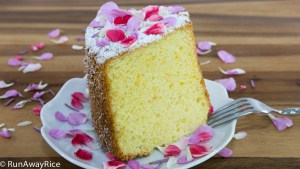
Orange Chiffon Cake with Edible Flowers
Cotton Cheesecake / Japanese Cheesecake
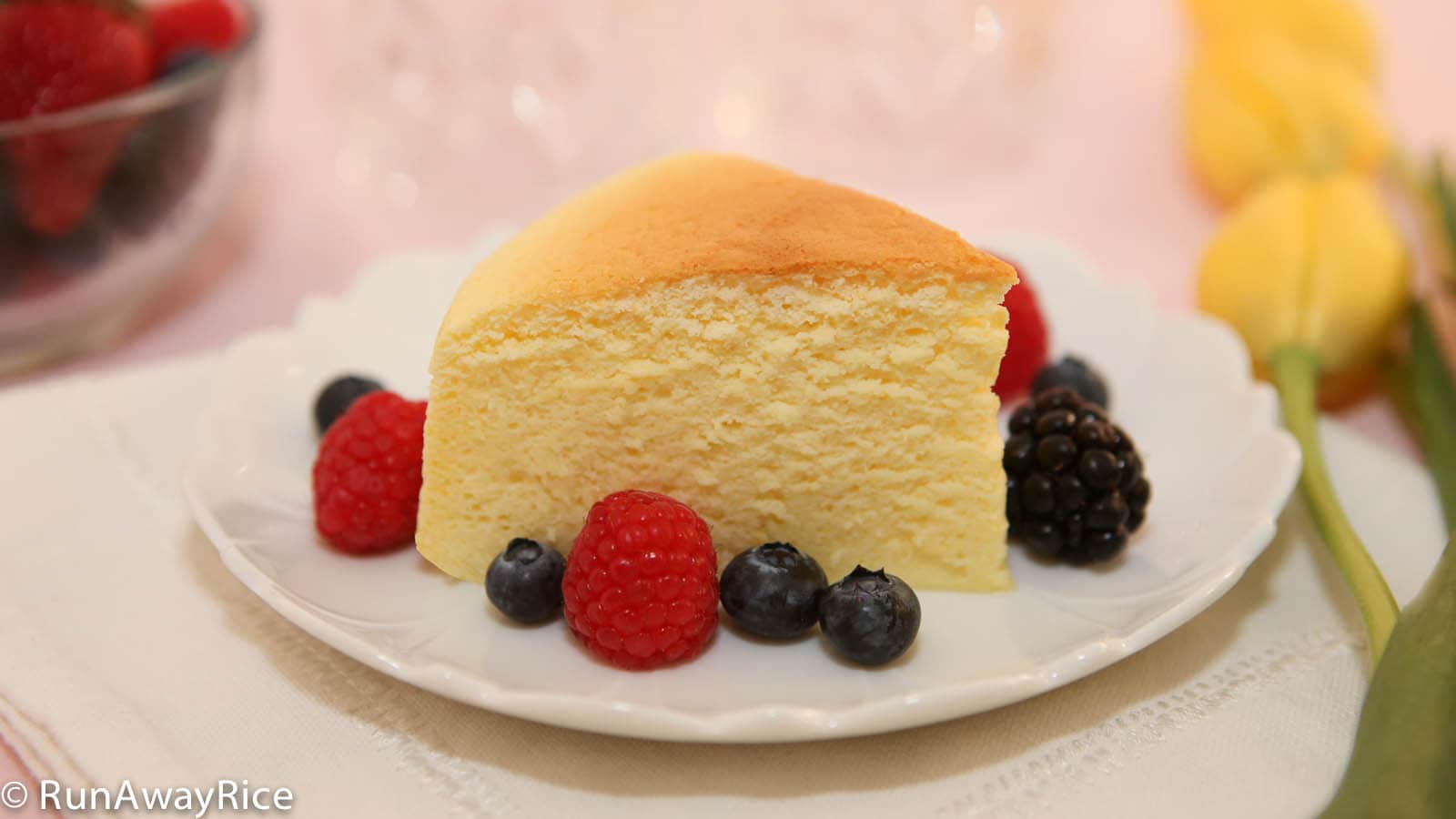
Ingredients
5 large eggs, at room temperature
1/4 tsp cream of tartar
1/2 cup sugar, divided
8 oz cream cheese, at room temperature
1/2 cup low-fat milk
1/4 cup unsalted butter, at room temperature
1 Tbsp lemon juice
1/4 cup all-purpose flour
2 Tbsp corn starch
Directions
Line the bottom and side of the springform pan with parchment paper. Wrap the springform pan with several sheets of foil, sealing it completely.
Fill a large baking pan halfway with water. Place it in the oven on the lowest rack. Preheat the oven to 315 F (157 C).
Separate the eggs and place the egg whites into a mixing bowl and the yolks into a measuring cup.
Beat the egg whites on Low speed for 30 seconds. Increase the speed to Medium Low and beat for another 30 seconds or until foamy. Add the cream of tartar. Increase the speed to Medium High and beat until the egg whites just start to thicken. Add 1/4 cup sugar gradually. Continue beating until the egg whites reach the soft peaks stage (approximately 3 minutes using a stand mixer).
In a separate bowl, add the cream cheese and milk. Mix on Low speed until creamy and smooth (approximately 2-3 minutes). Add the butter, remaining 1/4 cup sugar and lemon juice and beat for 1 minute. Add the flour and corn starch and mix for another minute. Finally add the egg yolks and mix for 1 more minute. Strain the batter using a sieve.
Add 1/3 of the egg whites and gently fold into the batter until mostly incorporated. Add another 1/3 and gently fold. Add the remaining 1/3 and gently fold.
Pour the batter into the lined springform pan. Spread the batter evenly into the pan and smooth out the top using a spatula. Holding the side of the pan, gently lift and drop the pan on the counter about 6 times to remove any big air bubbles.
Place the springform pan into the water bath and bake the cake for 1 hour and 10 minutes. Check the cake for doneness by inserting a toothpick into the center of the cake. (It should come out clean.) Bake the cake for an additional 10-15 minutes to brown the top.
Turn off the oven, open the oven door slightly (about 2-3 inches) and let the Cotton Cheesecake cool in the oven for 1 hour.
Remove the Cotton Cheesecake from the pan. Place on a plate and refrigerate for at least 4 hours.
Serve with fresh fruit, fruit puree, chocolate sauce, whipped cream, etc.
Cover and refrigerate any remaining portions. Enjoy the Cotton Cheesecake within the week.
Yields: 8 servings
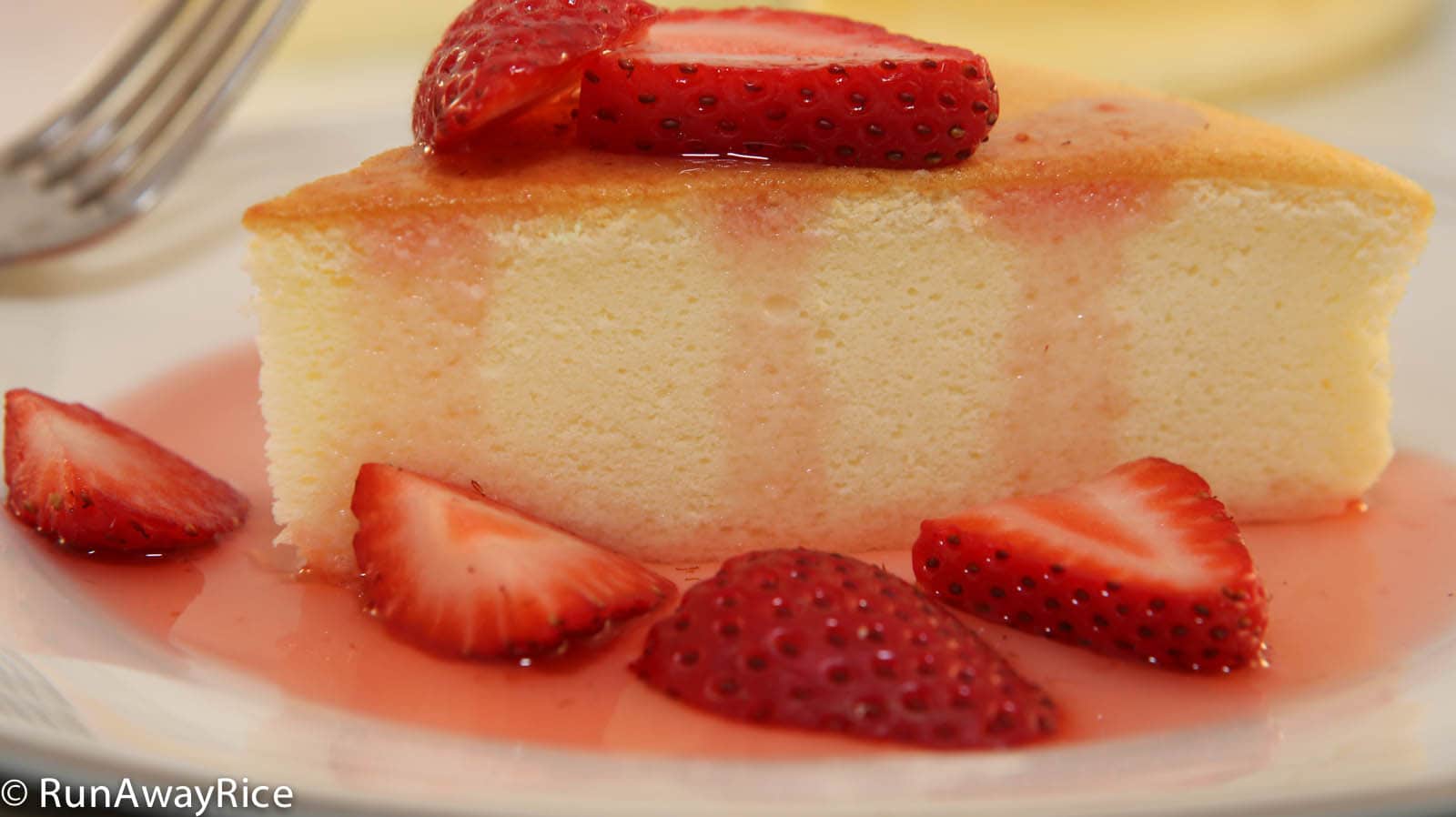

Cotton Cheesecake / Japanese Cheesecake
Cotton Cheesecake / Japanese Cheesecake is my new favorite dessert and after you try this recipe, it will become your favorite too. It's the perfect combination of sponge cake and cheesecake in both taste and texture. What I love about this scrumptious cake is it's not overly sweet as some cakes can be. The combination of fluffy cake with slightly tart cream cheese is absolutely heavenly. I hope you enjoy the recipe as much as I do. Please note this recipe can be a bit tricky. Watch the video and follow the steps exactly. Happy Baking!
Ingredients
- 5 large eggs , at room temperature
- 1/4 tsp cream of tartar
- 1/2 cup sugar , divided
- 8 oz cream cheese , at room temperature
- 1/2 cup low-fat milk
- 1/4 cup unsalted butter , at room temperature
- 1 Tbsp lemon juice
- 1/4 cup all-purpose flour
- 2 Tbsp corn starch
Bakeware
- 8 inch round springform pan
Instructions
-
Line the bottom and side of the springform pan with parchment paper. Wrap the springform pan with several sheets of foil, sealing it completely.
-
Fill a large baking pan halfway with water. Place it in the oven on the lowest rack. Preheat the oven to 315 F (157 C).
-
Separate the eggs and place the egg whites into a mixing bowl and the yolks into a measuring cup.
-
Beat the egg whites on Low speed for 30 seconds. Increase the speed to Medium Low and beat for another 30 seconds or until foamy. Add the cream of tartar. Increase the speed to Medium High and beat until the egg whites just start to thicken. Add 1/4 cup sugar gradually. Continue beating until the egg whites reach the soft peaks stage (approximately 3 minutes using a stand mixer).
-
In a separate bowl, add the cream cheese and milk. Mix on Low speed until creamy and smooth (approximately 2-3 minutes). Add the butter, remaining 1/4 cup sugar and lemon juice and beat for 1 minute. Add the flour and corn starch and mix for another minute. Finally add the egg yolks and mix for 1 more minute. Strain the batter using a sieve.
-
Add 1/3 of the egg whites and gently fold into the batter until mostly incorporated. Add another 1/3 and gently fold. Add the remaining 1/3 and gently fold.
-
Pour the batter into the lined springform pan. Spread the batter evenly into the pan and smooth out the top using a spatula. Holding the side of the pan, gently lift and drop the pan on the counter about 6 times to remove any big air bubbles.
-
Place the springform pan into the water bath and bake the cake for 1 hour and 10 minutes. Check the cake for doneness by inserting a toothpick into the center of the cake. (It should come out clean.) Bake the cake for an additional 10-15 minutes to brown the top.
-
Turn off the oven and open the oven door slightly (about 2-3 inches) and let the Cotton Cheesecake cool in the oven for 1 hour.
-
Remove the Cotton Cheesecake from the pan. Place on a plate and refrigerate for at least 4 hours.
-
Serve with fresh fruit, fruit puree, chocolate sauce, whipped cream, etc.
-
Cover and refrigerate any remaining portions. Enjoy the Cotton Cheesecake within the week.
Recipe Video
Notes, Tips & Tricks
- As the cream cheese, eggs and butter need to be at room temperature, advanced planning is required. About 2 hours before making the cake, remove the cream cheese and butter from the refrigerator. About 1 hour before take the eggs out of the fridge. The cream cheese and butter should be soft and spreadable for this recipe. If these ingredients are not quite ready, pop them in the microwave on Low power for about 15-20 seconds.
- Eggs are easiest to separate when they are cold. Egg whites are best beaten at room temperature to achieve the fluffiest texture. Separate the eggs while they are cold and then let them come to room temperature as you prep the remaining ingredients for the recipe.
- Use an 8 inch by 3 inch round springform pan. Line the pan so the parchment paper extends about 2 inches above the pan. The parchment paper wall provides support since the cake rises to about 3 inches tall during baking. Keep the paper to no more than 5 inches tall. Too much paper will prevent the top of the cake from browning nicely.
- The water bath is essential for keeping the cake moist. As the cake bakes for longer than the typical cake, the water bath is crucial. Additionally, the water bath insulates the cake and allows it to cook at a consist temperature. These factors are important for achieving the fluffy and moist texture for the cake.
- Be sure to fold the egg whites into the batter. Do not beat or mix vigorously as this will deflate the egg whites. (If you’re not familiar with the fold technique, check out how I do it in the video.)
- As oven temperatures vary, check to see if the cake is done (by using a toothpick) after 1 hour of baking. Then bake the cake until the top is golden brown. This is one recipe where over-baking the cake is ok. You won’t ruin the cake! Depending on your oven it may take up to 1 1/2 hours. Again, this is just fine.
- If your cake cracks on top, the heat is too high or the cake is too close to the heating element. Make note of this and adjust these things the next time.
- This cake will shrink (about 1/2 inch or so) after cooling so please don’t despair. Leaving the cake in the oven after it’s done baking helps to minimize some of the deflating.
- Refrigerate the cake for at least 4 hours before eating. The cold air sets the cream cheese and greatly improves the flavor and texture.
Nutrition FactsCotton Cheesecake / Japanese CheesecakeAmount Per ServingCalories 265 Calories from Fat 162% Daily Value*Fat 18g28%Saturated Fat 10g63%Cholesterol 149mg50%Sodium 138mg6%Potassium 113mg3%Carbohydrates 19g6%Sugar 14g16%Protein 6g12%Vitamin A 720IU14%Vitamin C 0.7mg1%Calcium 63mg6%Iron 0.8mg4%* Percent Daily Values are based on a 2000 calorie diet.
Want to learn more about making Cotton Cheesecake / Japanese Cheesecake and the common challenges? Check out this post where I detail the most common frustrations and how to fix them.
Cotton Cheesecake Challenges: Deflation, Cracks, and Water Bath Issues


Hi, Trang !
Can I bake this cake in the oven with a capacity of 9 liters ? Is the au bain marie technique should be changed ? Thank you, I hope you answer my questions.
Hi Miranti,
I am not sure if you meant 9 liters because that’s about 38 cups. That’s a lot of cake batter.
I think she meant a 9 liter oven. In some countries that’s how they measure the size of an oven. That’s a pretty small oven
Hi trance thank you for this wonderful recipe .
I made this cake last night and it came out perfect . Just that the bottom the colour was more yellowis. Is there a reason for it . I put it in the water bath and I had elevated it so the bottom won’t touch the water so much.
Can I try this in a square loaf pan instead of the round pan ?
Besides that the taste was great ! I won’t give up and will give it another go sometime
Hi Priya,
Sometimes the portion of the cake in the water bath gets steamed instead of baked and the cake is a darker color. (You can trim this off if you don’t like it.) Try to elevate the cake so it’s not so close to the heat sources and that should help. You can definitely try a square pan. Good Luck on the next round.
Dear Trang, thank you for this wonderful recipe. I was nervous as I don’t bake much and have never attempted this Japanese style of cheesecake, but I found the instructions very clear, the measurements exact and the video was so helpful and encouraging to see. The cake baked beautifully and really met my expectations. Thank you for sharing such an excellent recipe! ^_^
Hi Helena,
I am so glad to hear you were successful. That’s so awesome! 🙂 Thanks for sharing your results.
Hi Trang,
I’m going to bake it today, but noticed I bought the light cream cheese, I hope it will work out. Should I use an extra egg because of the light cream cheese?
Hi Cindy,
No adjustments are needed when using the light cream cheese. Enjoy the recipe!
Hi Trang,
Just wondering, how would I convert this to my 9″ springform? The baking time would be shorter, right? I assume that I could either keep the same amount of ingredients or add more ingredients to get the same height. What do you suggest? Thank you!
Annie
Hi Annie,
The baking time will be just a bit less. Check the cake after baking for 1 hour and then adjust time accordingly. Good Luck!
I just baked this yummy cake for a birthday celebration. It’s cooling in the oven, but I hear it calling.
Must. Resist. Temptation.
BTW, I accidentally used full fat plain yogurt instead of milk. Don’t know what possessed me. I think it was because I didn’t have milk on hand, but did have yoghurt. So far it looks just like your cake in the video. This will be served with a blueberry/raspberry compote.
Hi Jeff,
How did it turn out? Yogurt is a great substitute and I’ve used it as well. Serving with a fruit compote sounds absolutely delish!
Hi Trang,
this is my 1st time visit your blog.. I’m so hopeless with my Japanese Cake, I already made it for 3 times but it didn’t want to be fluffy like yours cake..
Can you give me the reason why my cake can’t be fluffy? and what I need to do for the next?
Thank you so much
Hi Felice,
Is the cake rising in the oven and deflating or is it not rising at all? Are you making any substitutions to the recipe? How long are you baking the cake?
Hi Trang
This is my first attempt making Japanese Cotton Cheesecake. Thank you for your clear narration and instruction. My cake didn’t turn out as attractive as yours. It cracked when it was baking in the oven for 45mins at 315 deg fer. Please let me know what the cause of this.
If I bake this cake in small mould like 4″ springform pan,
1. what is the baking time for the cake?
2. Do I need to change the oven temperature for baking?
3. Any other factors I need to change or consider?
Thank you
Hi Christine,
A cake that is cracked on top indicates the heat is too high. Lower the temperature by 10-15 degrees or move it farther from the heating element. Unfortunately, I have not made this cake in a 4″ springform pan. It won’t take nearly as long as your cake is smaller. Don’t skip the water bath. Use the same oven temperature and check for doneness using a toothpick. Good Luck and let me know how the smaller version turns out for you. 🙂
Hi Trang,
The cake of my 2nd attempt last night turned out to be solid and plasticy at the bottom (more yellowish) and soft and fluffy at the top (whitish). I used a square tin pan and baked at 315deg for 40mins, and 300deg for the next 40mins. Texture and taste far worst than my 1st attempt.
Today, I tried again for the third time. I baked with the 8″ black springform pan (same as the 1st time) at 305deg for 1hr10mins. Everything turned out fine in the oven as the cake looked the same as the one in your video. Sadly, after cooling and been removed from the oven, the cake couldn’t hold it’s height and formed a slight hourglass shape around the wall of the cake.
The texture of this cake is more moist at the bottom and light at the top.
May I know what is the cause of this please.
Hi Christine,
Hang in there! This is a recipe you need to try a few times to get just right. On your second attempt, I think the cake wasn’t cooked long enough to give it the structure to hold its height. I bake the cake for 1 hr and 10 minutes and then another 10-15 minutes. The hourglass shape you described is from possibly over-beating the egg whites. The moisture at the bottom of the cake may be because some water seeped into the cake from the water bath so be sure to wrap it well. Don’t give up, you’re really close!
Hi Christine,
Why my cake got sound when pressing on top.
But the tooth pick come up clear.
So I’m not sure is it totally cook or any part did I do wrong?
Hi Ivy,
The cake is a spongy but as long as the toothpick comes out clean, the cake is cooked. Also, the cake continues to bake using the residual heat when cooling in the oven for 1 hour. Let me know how it turned out for you.
Hi Trang,
Thank you so much for recipe !!! Very dilicious not too sweet we really enjoy the cake …
Hi Gigi,
I am really glad you enjoyed the recipe! Appreciate you taking the time to share your results.
Hi Trang,
I tried you recipe and my whole family love it! I just have one question. The cake I made basically had two layers, the bottom is more like a cheese cake and the top is more like a sponge cake. Do you know how to make it an even texture?
Thank you so much!
Hi Love,
It’s the water bath and how close the cake is to the heating elements that causes the inconsistent texture. Place the cake in the middle of the oven if you have both top and bottom heating elements. For a sponge-like texture, place the water bath underneath the cake but not too close to it. For a more cheesecake-like texture, fill up the water bath so it comes up 3/4 of the way up the cake pan. Good Luck.